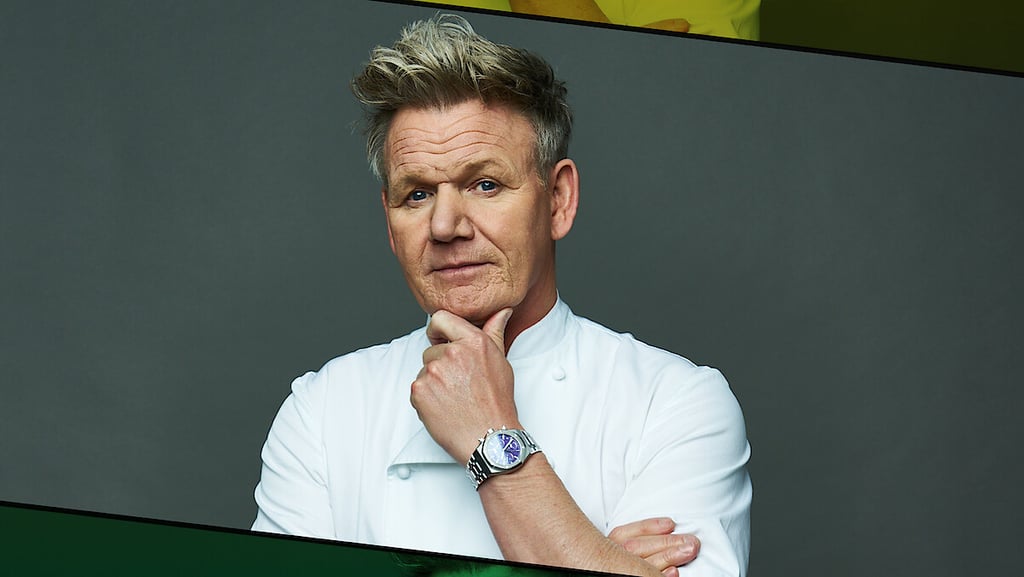
I was watching Netflix’s Being Gordon Ramsay and in Episode 4 you meet Jean-Claude — the guy who was basically Gordon Ramsay’s maître d’ at his first Michelin-starred restaurant.
And Jean-Claude drops a line that should be printed on the wall of every office, every Zoom room, every performance review… and maybe tattooed on the inside of our eyelids:
“It’s not a job, it’s something that you do every day for pleasure.”
Let that land.
Not because it’s cute. Not because it’s “inspirational.”
Because it’s a different operating system for work.
And if you’ve ever thought, I want more from work… I want to level up… I want to feel proud of myself again… I want success without burning out… then this is the conversation you’ve been waiting for.
I started watching the series as a serious foodie, someone who has owned a restaurant and someone who is working on a new food project alongside my coaching practice, but as the series unfolded, I realised I was getting coaching insights too.
Pleasure isn’t fluff. It’s fuel.
When most people hear “pleasure” in the context of work, they imagine something soft:
But Jean-Claude is not talking from a beanbag.
He’s talking from a world where standards are brutal, timing is everything, pressure is constant, and performance is public. The Michelin-star world doesn’t reward delusion. It rewards results.
So if someone from that environment calls work “pleasure,” he’s not suggesting a fantasy.
He’s describing the engine behind sustained excellence.
Because the truth is: people don’t produce great work consistently through misery. They might sprint for a while. They might achieve on adrenaline. But eventually, the system crashes.
Pleasure — the real kind — is what keeps performance alive.
The biggest misunderstanding about “do what you love”
Here’s where people roll their eyes:
“Oh yeah, do what you love… must be nice… that’s unrealistic…”
And honestly? If “do what you love” means quit your job tomorrow and hope the universe sorts it out, then yes — that’s reckless.
But that’s not what strengths-based decision-making is.
Strengths-based work isn’t just “do what you love.”
It’s understand why doing what you love turns you on.
Because that “why” is everything.
That “why” is your strengths.
And strengths are the difference between:
Strengths are the DNA of how you succeed
A strength isn’t just something you’re good at.
A strength is something you:
do well
do often
and it gives you energy
That energy matters because it becomes:
focus → momentum → confidence → results.
This is why I describe strengths as your DNA.
Not in a poetic way. In a practical way.
Because when you understand your strengths, you understand your building blocks — the parts of you that reliably create value.
Strengths tell you:
how you solve problems
how you influence people
how you lead
how you make decisions
how you perform under pressure
how you build relationships
how you learn fastest
what drains you
what energises you
and what conditions help you thrive
Which means strengths aren’t just about work.
They’re the building blocks for designing your life.
And when you learn to work with your strengths — instead of against yourself — you stop needing constant willpower just to get through the week.
You get momentum.
And momentum changes everything.
Why pleasure and performance are not enemies
Let’s say it plainly:
Doing what turns you on isn’t naïve.
It’s often where your best performance lives.
Because when you’re operating in your strengths:
you learn faster
you handle pressure better
you recover quicker
you show up more consistently
your confidence becomes grounded (not fragile)
and your results improve
So the decision isn’t:
“Do what you love and be crazy.”
It’s:
“Do what you love because it’s aligned with your strengths… and that makes you powerful.”
That’s the grown-up version of the message.
The “bored but busy” problem: unrealised strengths
Now here’s the part I see constantly in coaching:
People aren’t always unhappy because the job is “bad.”
They’re unhappy because the job is starving parts of them.
They feel:
That often points to unrealised strengths — strengths you have potential for, but you’re not using enough yet.
Unrealised strengths are usually where your next level lives:
Because unrealised strengths are often the strengths you haven’t fully converted into value yet.
They’re not a fantasy.
They’re a signal.
Work isn’t just survival. It can be a vehicle.
Most people unconsciously treat work as:
Jean-Claude offers a third option:
Work as a vehicle — for expression, growth, contribution, and yes, income.
That doesn’t mean every day is magical.
It means you’re designing your working life around your strengths — your DNA — so you can build success in a way that’s sustainable and satisfying.
Not just “getting by.”
Actually building something.
How to turn “pleasure” into something you can commercialise
Let’s keep this grounded.
Commercialising what turns you on doesn’t always mean quitting. It often starts with a smarter move:
Step 1: Identify the pleasure
What do you do that feels like “not a job”?
Step 2: Find the strengths underneath
Why does it turn you on? What strengths are firing?
Step 3: Translate it into value
Who benefits? What problem does it solve? What outcome does it create?
Step 4: Create reps (proof)
Do more of it. Get results. Build evidence.
Step 5: Design your next move
That might be:
reshaping your current role
stepping into leadership
positioning yourself differently
shifting industry
building a side offer
creating a niche
going independent when the time is right
This isn’t reckless. It’s strategic design.
The 10-minute “Work Turn-On Audit”
If you want to start today, do this without overthinking:
What part of my work week gives me energy?
What part drains me — even when I do it well?
What do I do that feels like “not a job”?
What strengths are underneath that pleasure? (the “why”)
What would a 10% redesign of my week look like if I used those strengths more?
The magic isn’t in dramatic leaps.
It’s in deliberate design.
Because a small strengths-led shift in alignment can create a huge shift in how work feels — and how well you perform.
The bottom line
Jean-Claude’s quote isn’t telling you to chase fun.
It’s telling you to build a working life where your strengths are doing the heavy lifting — so excellence becomes sustainable, success becomes repeatable, and happiness becomes a byproduct.
“It’s not a job, it’s something that you do every day for pleasure.”
That’s not fantasy.
That’s a blueprint.
And if you want more from work — more success, more confidence, more momentum, more meaning — start here:
Don’t just ask what you enjoy.
Ask why it turns you on.
That “why” is your strengths DNA.
And when you learn to use it on purpose, you don’t just become happier.
You become dangerous (in the best way).
Ready to design work that turns you on (and actually pays)?
If you’re done drifting, second-guessing, or tolerating a career that looks fine on paper but feels flat in real life — let’s talk.
In your personalised Foundations Program, we’ll:
pinpoint what’s currently draining you (even if you’re performing well)
uncover the strengths behind what energises you (your “DNA”)
identify any unrealised strengths trying to come online
map a clear next move — role redesign, promotion strategy, pivot, or a smarter path to commercialising what you love
Book a call with me and let’s find the strengths-based strategy that makes success feel good again.
Or start your Foundations Program now